Summary
Disclaimer: This summary has been generated by AI. It is experimental, and feedback is welcomed. Please reach out to info@qconlondon.com with any comments or concerns.
Multicloud presents unavoidable operational complexity. Treating multicloud strategy as a product is recommended for sustainable management. The session covers how to utilize AI effectively to manage multicloud complexity.
Key Takeaways:
- Treat Multicloud as a Product: Define customers and outcomes, set boundaries, and manage with a capability map.
- N-Scale Complexity: It's not just about clouds but involves various lines of business, product teams, data, and tools.
- AI Integration: Used well, AI can reduce complexity across architecture but can cause more chaos if misapplied.
Challenges in Cloud Migration:
- Initial reasons for migration were cost optimization and agility.
- However, migration led to increased costs and complexities such as ungoverned workloads and non-compliant systems.
Strategic Recommendations:
- Capability-Based Planning: Focus on demand management, guardrails, and measurable adoption.
- Demand and Portfolio Management: Manage resources and prioritize tasks effectively.
- Think Product Mindset: Solving multicloud's complexity requires innovative product management strategies.
Conclusion:
The presentation highlights the need for a structured product mindset in tackling multicloud strategy complexities, with an emphasis on the proactive use of AI and strategic capability management for sustainable operations.
This is the end of the AI-generated content.
Abstract
You can't really "opt out" of multicloud anymore. Between cloud concentration risk, SaaS sprawl, and increasing regulatory expectations, most enterprises end up operating across multiple clouds whether they planned to or not. The hard part isn't having two or three providers. It's the hidden operational complexity that follows: demand management with each provider, consistent enforcement of controls, and environments that keep getting harder to run.
That complexity multiplies fast. Multicloud becomes an "N problem" because it is not just clouds — it is clouds times lines of business, times product teams, times data and tooling. Every combination creates more decisions to make and more things to keep consistent: identity, networking, policy, observability, cost, delivery. Traditional engineering execution alone can't scale to that.
The only sustainable approach is to treat multicloud strategy as a product: define customers and outcomes, set boundaries, build a capability map, and run a roadmap with measurable results.
Then AI lands on top of all of this. Used well, AI can reduce the burden of N-scale complexity across architecture, organisational change, and engineering workflows. Used without a solid foundation, it accelerates chaos: faster changes, more drift, more inconsistency, and more risk.
In this talk, I'll share the pre-work that makes the difference — the technical foundations and product management discipline that allow AI to help rather than hurt. No silver bullets, just hard-won patterns that scale.
You'll learn:
- How to frame multicloud as a product with clear users, boundaries, and success metrics
- How to reduce N-scale complexity using capability-based planning and "golden path" thinking
- Where AI helps (and where it amplifies disorder) in platform and architecture work
- Practical patterns for demand management, guardrails, and measurable adoption
Interview:
What is your session about, and why is it important for senior software developers?
Most companies ended up multicloud by accident — shadow IT, M&A, best-of-breed SaaS. The problem is that nobody treated it as a product. This session is about fixing that. We'll show how to apply product management discipline to cloud strategy: define your customers, set boundaries, build a capability map, run a roadmap with measurable outcomes. For senior developers and architects, this matters because the complexity you're fighting every day is often a strategy problem, not a technology one.
Why is it critical for software leaders to focus on this topic right now, as we head into 2026?
AI is the forcing function. Every AI workload decision — where it runs, how data moves, what controls apply — lands on top of your multicloud foundation. If that foundation is unmanaged chaos, AI makes it worse, faster. Leaders who don't get ahead of this will spend the next two years firefighting instead of building.
What are the common challenges developers and architects face in this area?
Three things we see constantly: no single source of truth (every team has their own cloud view, nobody has the full picture); demand management at N-scale (it's not just clouds — it's clouds x business lines x product teams x data, and every combination creates new decisions); and treating multicloud as an engineering execution problem when it's fundamentally a governance and prioritisation problem.
What's one thing you hope attendees will implement immediately after your talk?
Filter the noise and sit with the problem before jumping to solutions. We tend to skip prioritisation entirely — or do it once and never revisit it. We focus on features instead of outcomes, on how instead of why and what. Multicloud strategy is no different: most teams are already three solutions deep into a problem they haven't properly defined yet. Slow down. Ask why this matters, what success looks like, and who it serves. The how gets a lot easier after that.
What makes QCon stand out as a conference for senior software professionals?
The signal-to-noise ratio. Most conferences are either too vendor-driven or too academic. QCon consistently brings practitioners who are doing the work at scale and are willing to share what actually happened — including what didn't work. That's rare and valuable.
Speaker
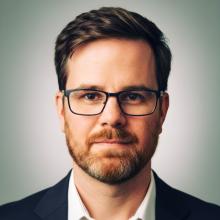
Luis Henrique Albinati Junior
Executive Director, Product Strategy @JP Morgan Chase, Previously @Microsoft, @Oracle, and @Red Hat
Technology executive at JPMorgan and former big tech and startup CTO who has built and scaled zero-to-one platforms across fintech and healthcare, impacting thousands of users. With experience spanning Microsoft, Oracle and Red Hat to venture-backed companies, he is known for bridging enterprise scale with entrepreneurial speed and turning emerging technology into real products.
Find Luis Henrique Albinati Junior at:


Speaker

Surabhi Mahajan
Executive Director @JP Morgan Chase
Surabhi is a senior engineering leader specializing in multi-tenant distributed systems and multi-cloud architecture. With a background in financial, health insurance, and pharmaceutical industries, she has delivered complex software products across cloud and on-premise platforms. Her technical expertise is in building resilient, scalable infrastructure with a deep commitment to observability and cloud-native strategies.
Find Surabhi Mahajan at:
Date
Monday Mar 16 / 11:45AM GMT ( 50 minutes )
Location
Windsor (5th Fl.)