Summary
Disclaimer: This summary has been generated by AI. It is experimental, and feedback is welcomed. Please reach out to info@qconlondon.com with any comments or concerns.
Thea discusses the integration of machine learning with particle physics at the CERN Large Hadron Collider (LHC) and the challenges associated with processing massive data streams in real-time.
Introduction
The CERN LHC generates data on a massive scale, producing 10,000 exabytes annually from high-energy proton collisions. The data handling must be real-time due to constraints in storage and compute capacity. The High-Luminosity LHC poses additional challenges with increased data complexity and requires enhanced machine learning solutions for efficient data processing.
Data Processing and Machine Learning Challenges
- The first trigger stage at the LHC handles data rates approximating 5% of global internet traffic, needing low-latency, high-throughput machine learning solutions
- FPGA and custom silicon are used for sub-microsecond latency, processing data faster than traditional CPU/GPU solutions
- Emerging techniques involve hardware-aware model design, quantization, sparsity, and hardware-software co-design to enhance nanosecond inference
Innovative Machine Learning Techniques
- Use of variational autoencoders for data compression and efficient embedding transmission via optical links
- Graph neural networks facilitate event reconstruction with tight latency constraints
- Applying quantization aware training and FPGA-specific optimizations to manage resource constraints and latency
Impact and Future Directions
The implementation of machine learning at CERN is not only a necessity for current operations but also serves as a potential model for similar data-intensive projects in other scientific domains and industries. The collaboration extends to industry partners like Google, Siemens, and Volvo, highlighting the broad applicability and advancement of these technologies.
The presentation concludes with a call to expand the application of these machine learning techniques to various scientific and industrial fields, offering immense opportunities for future research and collaboration.
This is the end of the AI-generated content.
Abstract
The CERN Large Hadron Collider (LHC) produces O(10,000) exabytes of raw data annually from high-energy proton collisions. Handling this volume under strict compute and storage limits requires real-time event filtering capable of processing millions of collisions per second. A multi-tier architecture of ASICs, FPGAs, CPUs, and GPUs reconstructs and analyzes events, rejecting >98% of data within microseconds.
With the transition to the High-Luminosity Large Hadron Collider (HL-LHC), the first trigger stage, located in radiation-shielded caverns ~100 m underground, must handle data rates approaching ~5% of global internet traffic and significantly increased event complexity. Maintaining physics sensitivity therefore requires highly efficient machine-learning algorithms optimized for real-time inference with extreme throughput and ultra-low latency.
In this talk, we will discuss emerging techniques for low-power, low-latency inference, including hardware-aware model design, quantization, sparsity, and hardware-software co-design. Using examples from particle physics and other domains, we will show how real-time machine learning is both a practical necessity and a powerful tool for scientific discovery.
Speaker
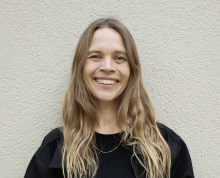
Thea Klaeboe Aarrestad
Particle Physics and Real-Time ML @CERN @ETH Zürich
Thea Klæboe Aarrestad is a particle physicist and fellow at the Institute for Particle Physics and Astrophysics at ETH Zürich. She earned a PhD in particle physics from the University of Zurich and previously worked as a research fellow at CERN in Geneva. Her work centers on applying machine learning to particle physics, with an emphasis on real-time techniques for discovering new phenomena, including low-power nanosecond inference on FPGAs and ML-based anomaly detection for analyzing proton collision data from the Large Hadron Collider. She was awarded the Young Experimental Physicist Prize by the European Physical Society for her contributions to integrating machine learning into experimental particle physics.
Find Thea Klaeboe Aarrestad at:


Date
Wednesday Mar 18 / 10:35AM GMT ( 50 minutes )
Location
Windsor (5th Fl.)